Estate & Community Safety
An Estate Committee’s Checklist for Introducing Mobile Panic Alerts
A rollout checklist for trustees, managing agents and security teams: ownership, coverage, resident onboarding, privacy and controlled incident drills.
Published by Omega Panic Grid ·
In this guide
Choose the response arrangement before the app
An estate panic button is most useful when residents understand who is listening and what that team can do. Before selecting software, the committee or managing agent should agree whether monitoring sits with the estate control room or an appointed external provider. Record the coverage area, service hours and escalation contacts in the operating arrangement.
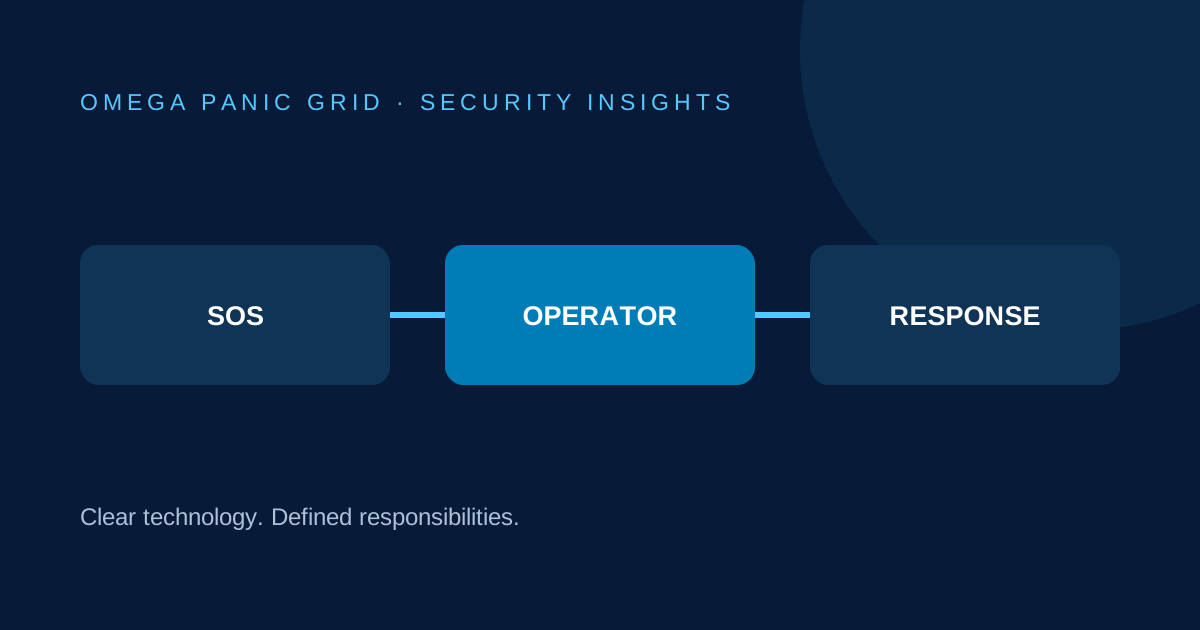
Do not leave residents to infer that every activation calls police, dispatches an ambulance or reaches a nationwide armed response network. Those are separate service commitments. An alert platform passes information; the appointed organisation remains responsible for assessing and responding within its actual remit.
Define ownership without publishing sensitive procedures
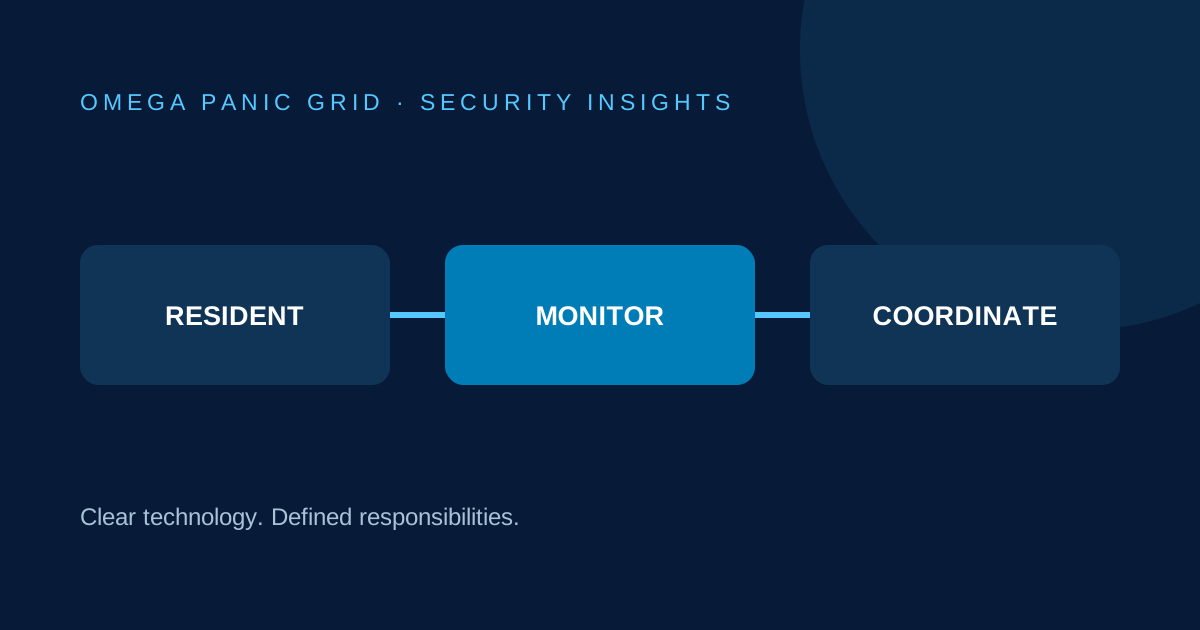
Name the roles responsible for day-to-day monitoring, onboarding and supervision. Decide how the team will recognise a planned drill and who is allowed to authorise it. Document the process for handling a resident who has moved out or changed contact details.
Keep sensitive access information, gate procedures and internal escalation details out of public resident-facing marketing. A public guide can explain how to request assistance and where to obtain support without exposing the control room’s security arrangements.
Set realistic location expectations
An estate may contain several entrances, blocks, shared facilities and units with similar addresses. A reported phone position can support assessment but may not identify the correct access point or floor. Agree how operators will confirm important details and how existing site knowledge will support the handoff.
Test at a selection of representative locations with authorised volunteers. Include an indoor setting and an area where connectivity is weaker if that is relevant to the estate. Record what was observed. Do not turn a successful test at one location into a guarantee for every property or device.
Give residents a short onboarding path
Provide a clear invitation, a support contact and a plain-language explanation of the service. Ask each participant to complete registration through the approved route and confirm that the correct organisation is shown. Avoid forwarding private invitation tokens to unrelated people.
A useful resident briefing explains when to use SOS, what the service does, the limits of monitoring and response, and the alternative contact arrangements. It should distinguish a planned demonstration from a live request. Give residents an accessible way to ask questions before launch rather than relying on a long technical document.
Decide how personal information will be governed
Identity, contact and location information should be treated as information that needs controlled handling. Agree who can access incident records, how requests for access or correction are handled and what retention decisions apply. Do not publish real resident incidents to demonstrate the platform.
POPIA includes conditions for processing personal information and security safeguards. The Information Regulator’s guidance is a starting point for the responsible parties’ governance work; it does not certify an estate’s deployment. Obtain appropriate advice where responsibilities between an estate, managing agent and provider are unclear.
Run a signed-off drill and review it
Prepare a short acceptance checklist: correct registration, alert receipt by the intended team, acknowledgement, contact procedure, dispatch handoff where applicable and incident closure. Use test identities or authorised volunteers, and clearly mark the exercise. Confirm the outcome with the monitoring supervisor before telling residents the service is ready.
Omega Panic Grid provides a branded platform proposition and demonstrates a control-room workflow on its website. The estate must still settle its monitoring arrangement and confirm the package and setup with Omega. Use the estate solutions page to frame that conversation and the public demo to explain the sequence to committee members.
Continue your research
- Current platform pricing
- Interactive platform demonstration
- Setup and quotation enquiry
- Panic button software for security companies
References and product evidence
- Information Regulator — POPIA and information-officer guidance
- Omega Panic Grid — platform, pricing, demonstration and onboarding
Sources reviewed 1 November 2026. General planning guidance, not legal or medical advice. No response time, delivery or business return is guaranteed. Confirm current product and contractual details for your deployment.